


- “AudioQuest has transformed the DragonFly into its best DAC to date” — What Hi-Fi? ★★★★★
AudioQuest DragonFly Black USB DAC and Headphone Amplifier
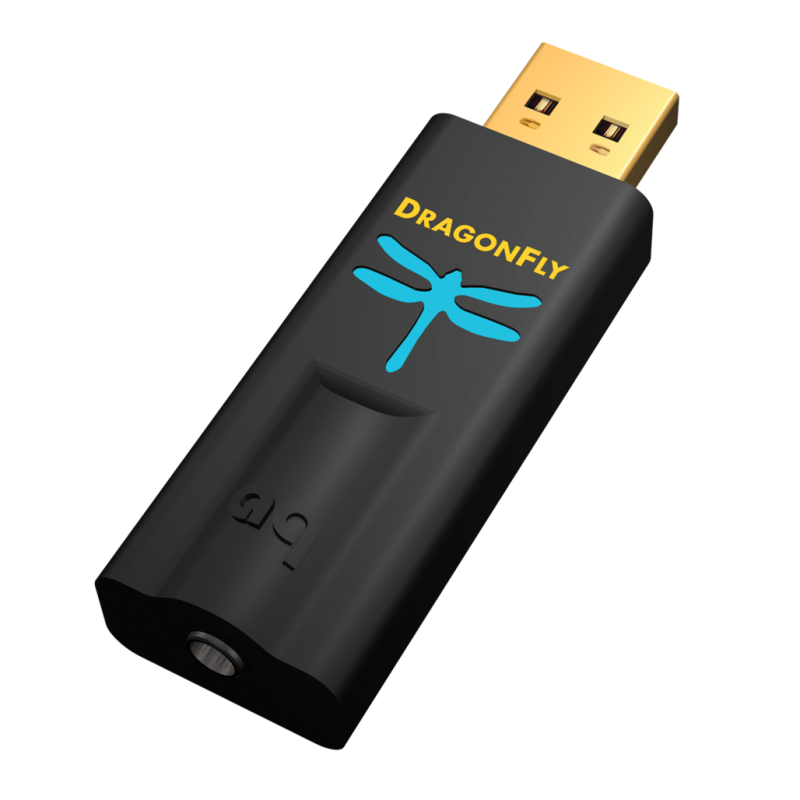
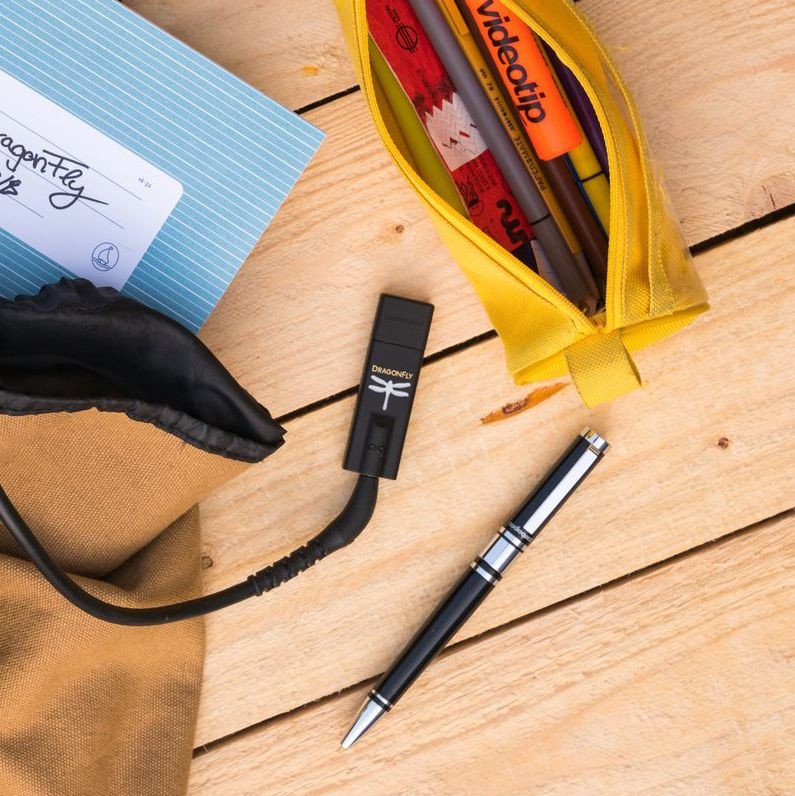
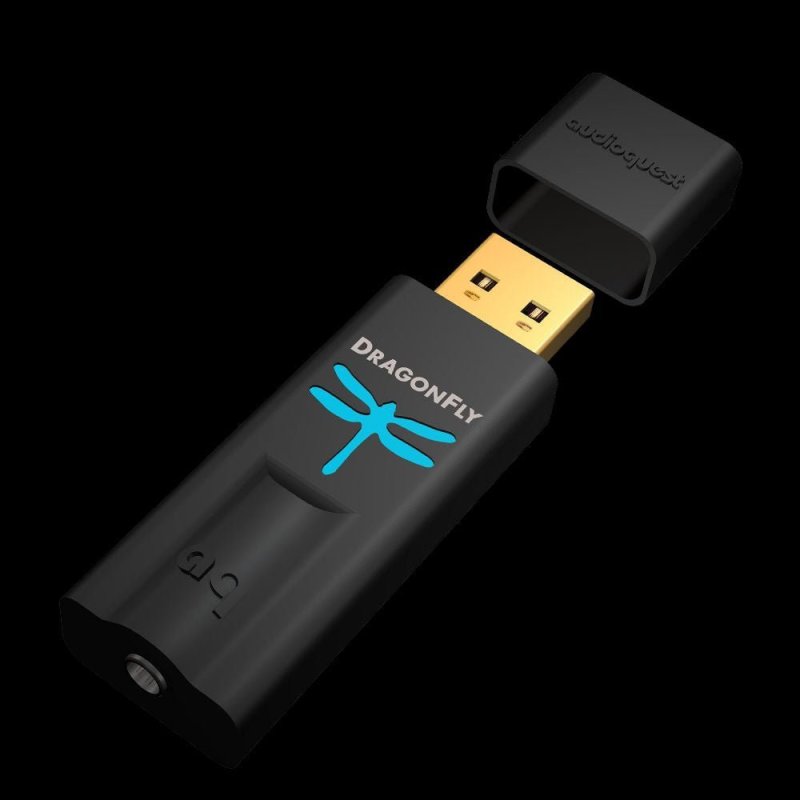
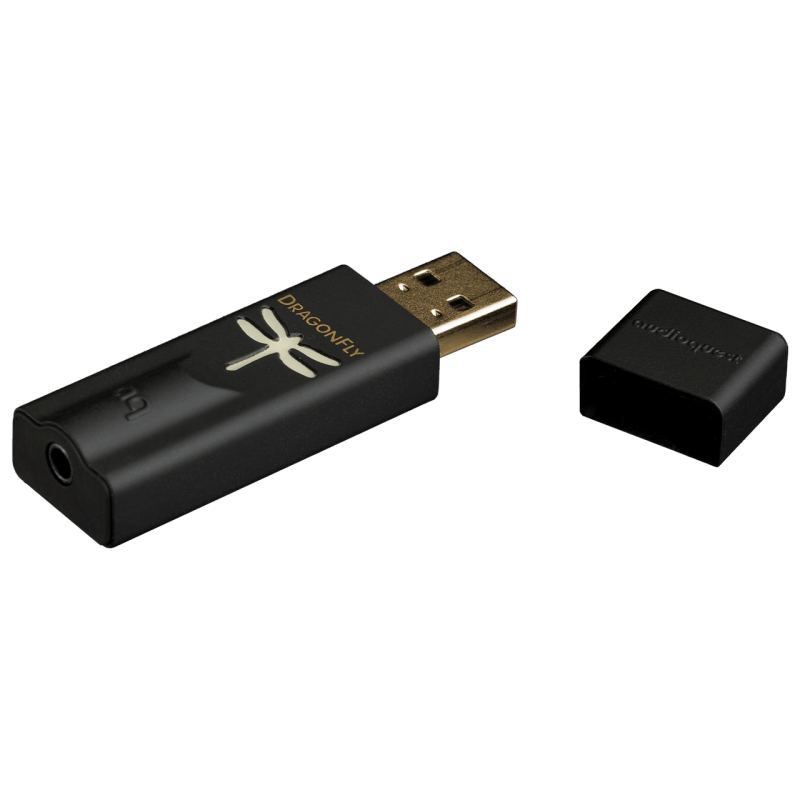

- 32-bit ESS Sabre 9010 DAC with minimum-phase filter
- Asynchronous USB with Streamlength and monoClock
- Plug-and-play, no drivers required
Discontinued
This product has been discontinued and is no longer available to purchase.
Looking for something similar? Browse our full range from AudioQuest, or contact us for a recommendation.
Awards & Reviews
Description
The DragonFly Black is the most affordable member of AudioQuest's DragonFly family of USB DACs — thumb-drive-sized devices that bypass the compromised audio circuitry built into computers, phones, and tablets to deliver cleaner, more detailed sound to headphones, powered speakers, or a full hi-fi system. It sits below the DragonFly Red (which adds a higher-performance DAC chip, a more powerful headphone amplifier, and greater output voltage) and the flagship DragonFly Cobalt (which adds dedicated noise-dissipation filtering). The DragonFly Black represents AudioQuest's entry point into purpose-built digital-to-analogue conversion — and for a great many listeners, it represents the single most audible upgrade available for the price.
Why a USB DAC Matters
Every device that plays digital audio — laptop, phone, tablet — contains a built-in DAC. It has to: the speakers or headphone output need an analogue signal, so the digital data must be converted somewhere. The problem is that in most consumer devices, the DAC is an afterthought. It shares circuit board space with WiFi radios, Bluetooth transmitters, processors, and power-management circuits, all of which generate electrical noise that degrades the audio signal. The headphone amplifier driving the output jack is typically minimal, optimised for low power draw rather than sound quality, and the output stage is compromised by the need to fit within a device designed primarily for other tasks.
The DragonFly Black plugs into a USB port and takes over the entire audio chain — digital reception, conversion, amplification, and volume control — in a purpose-built, audio-optimised circuit. The host device simply sends digital data over USB; the DragonFly handles everything else. The result is a cleaner signal path, lower noise floor, more accurate timing, and a headphone amplifier designed specifically to drive real headphones rather than simply make sound come out of a socket.
ESS Sabre 9010 and Minimum-Phase Filtering
At the heart of the DragonFly Black is the 32-bit ESS Sabre 9010 DAC chip — a high-performance converter from the same family used in dedicated CD and Blu-ray players costing considerably more. The 9010 employs a minimum-phase digital reconstruction filter, which concentrates all of its time-domain ringing after the impulse rather than splitting it before and after. This matters because pre-ringing (where the filter produces output before the signal arrives) is perceptually unnatural — it creates a subtle sense of artificial hardness that linear-phase filters can introduce. The minimum-phase approach trades mathematically perfect frequency response for a more naturally detailed, dynamically expressive sound that better preserves the transient character of the original recording.
The analogue circuits following the DAC chip are direct-coupled — there are no coupling capacitors or other extraneous components in the signal path between the ESS converter's output and the 3.5mm jack. Every component in the signal path introduces some distortion, however small, so AudioQuest's approach is simply to use as few as possible.
Streamlength Asynchronous USB and monoClock
The USB interface is built around a Microchip PIC32MX microcontroller running Streamlength — a proprietary asynchronous USB audio protocol developed by Gordon Rankin of Wavelength Audio, who has been AudioQuest's digital design partner since the original DragonFly. In asynchronous mode, the DragonFly commands the timing of data transfer rather than accepting whatever the computer sends. This is critical because timing errors in digital audio — jitter — directly affect sound quality, smearing detail and collapsing the sense of space and dimensionality in the music.
The Microchip controller draws 77% less power than the Texas Instruments chip used in the earlier DragonFly v1.2. This dramatically reduced power consumption is what makes the current DragonFly Black viable with smartphones and tablets, which cannot supply the USB current that earlier models demanded. The controller uses 32-bit architecture and supports firmware updates via AudioQuest's free Desktop Device Manager, so the DragonFly can evolve as USB audio standards and capabilities develop.
The clocking system uses what AudioQuest calls monoClock — a single ultra-low-jitter clock generated from the ESS DAC chip that runs the headphone amplifier and all microcontroller functions. Most portable DACs use multiple clocks for different subsystems, and the interactions between those clocks introduce noise and timing uncertainty. By deriving everything from one master clock, the DragonFly eliminates inter-clock interference entirely.
Headphone Amplifier and Volume Control
The DragonFly Black's built-in headphone amplifier uses a 64-step analogue volume control. When connected to a computer or mobile device, adjusting the host's volume slider controls the DragonFly's onboard volume through proxy — the host sends a digital command, but the actual volume adjustment happens in the analogue domain inside the DragonFly, preserving maximum resolution at all volume settings. This is a significant distinction from simply turning down the digital level before conversion, which reduces bit depth and throws away musical information at lower volumes.
The maximum output is 1.2V RMS — enough to drive all preamplifier and integrated amplifier input circuits, and sufficient for a wide range of efficient headphones. With more demanding, lower-sensitivity headphones that require higher drive voltages, the DragonFly Red's 2.1V output and ESS headphone amplifier with bit-perfect digital volume control offer greater authority and dynamic range.
Two Output Modes
The DragonFly Black operates in two modes depending on how you use it. Connected directly to headphones or powered speakers, it functions in variable-output mode — the host volume control adjusts the output level. Connected to a preamplifier, integrated amplifier, or AV receiver input via a 3.5mm-to-RCA cable (such as AudioQuest's own Golden Gate or Evergreen 3.5mm-to-RCA variants), you set the host volume to maximum for a fixed 1.2V line-level output, and control listening level from the amplifier as normal. In this configuration, the DragonFly Black serves purely as a high-quality external DAC, and its performance is limited only by the quality of the downstream amplification and speakers.
Compatibility and LED Indicator
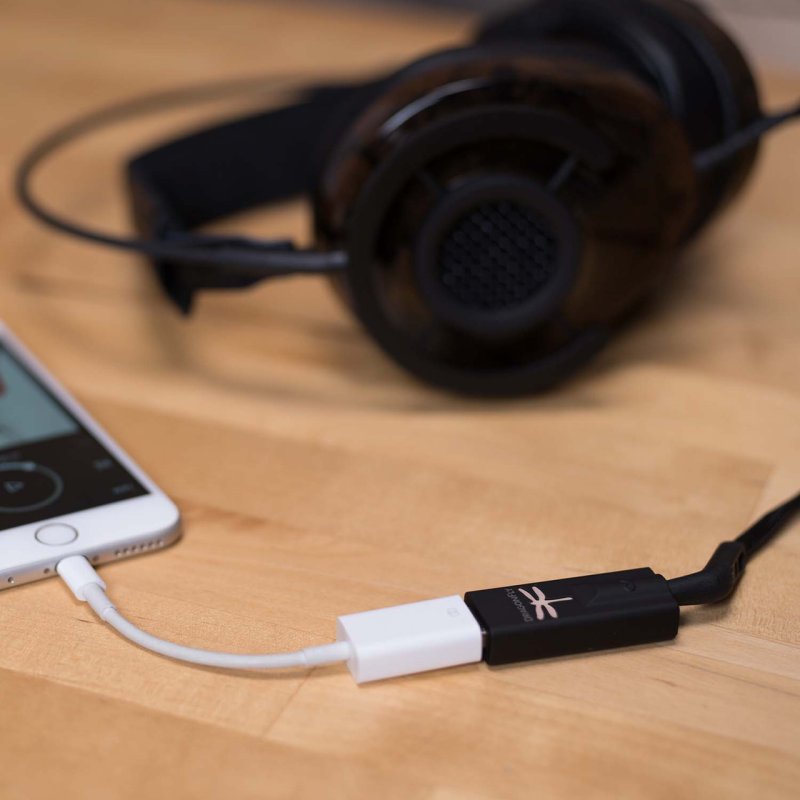
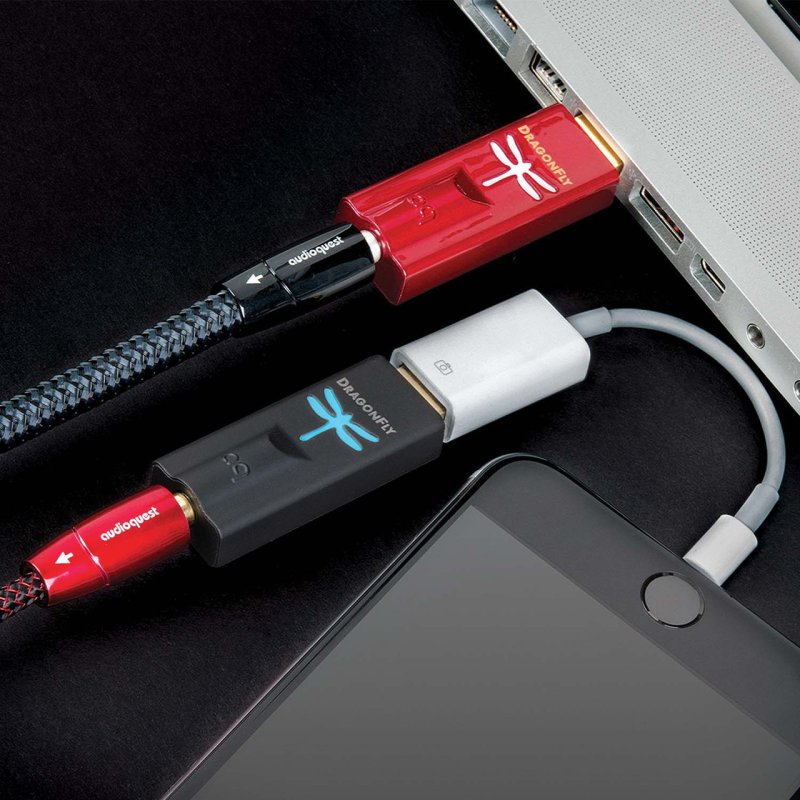
The DragonFly Black is compatible with Apple macOS (10.6.8 and later), Windows (7 and later), and Linux computers, as well as iOS devices (using Apple's Lightning-to-USB 3 Camera Adapter or, for USB-C iPads and iPhones, a USB-C adapter) and Android devices running Lollipop 5.0 or later (using AudioQuest's DragonTail USB adapter or any compatible OTG cable). No drivers are required on any platform — it is genuinely plug-and-play.
The dragonfly-shaped LED on the top of the unit changes colour to indicate the incoming sample rate: red for standby, green for 44.1kHz (CD standard), blue for 48kHz (video/broadcast standard), amber for 88.2kHz, and magenta for 96kHz. Files recorded at sample rates above 96kHz will play — the host device's software downsamples them before sending to the DragonFly.
Build and Accessories
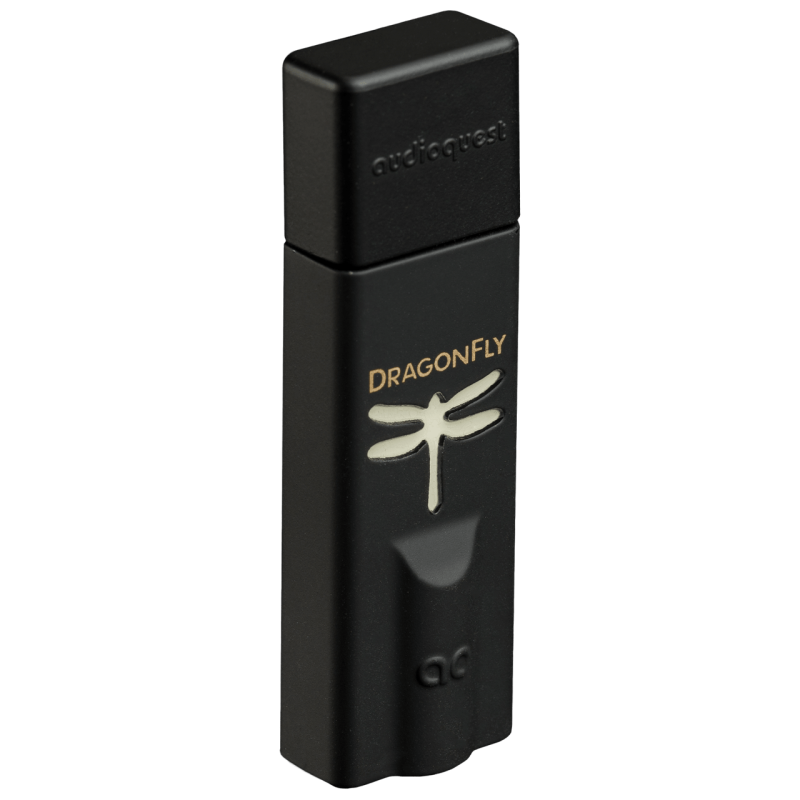
The DragonFly Black is housed in a zinc alloy case with a soft-touch matte-black finish and gold lettering. The USB Type-A connector is gold-plated. A protective plastic cap covers the USB connector during transport, and a leatherette travel pouch is included.
Choosing Between Black, Red, and Cobalt
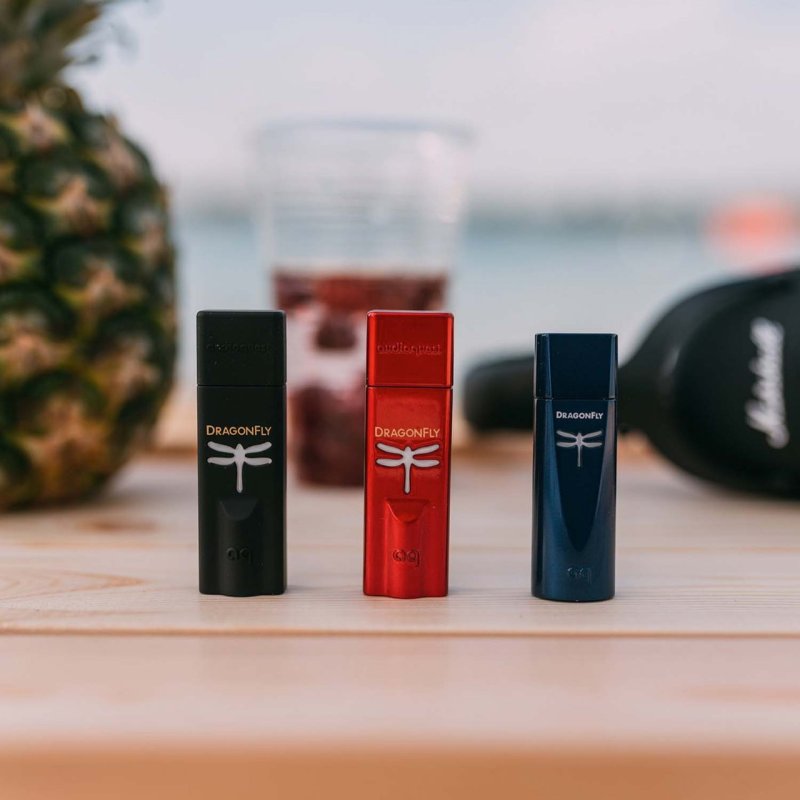
In practical terms, the DragonFly Black is the right choice for listeners using efficient headphones (in-ears, most on-ears, and many over-ears) or feeding a separate amplifier, where the 1.2V output is more than sufficient. The DragonFly Red steps up with the higher-performance ESS 9016 DAC chip, an ESS headphone amplifier with bit-perfect digital volume control, and a 2.1V output that can drive more demanding headphones with greater authority. The DragonFly Cobalt adds the ESS 9038Q2M flagship DAC chip, dedicated power-supply noise-dissipation filtering, and a slightly smaller case.
For many listeners — particularly those connecting to a hi-fi system via the 3.5mm output, or using reasonably efficient headphones — the DragonFly Black delivers a transformative improvement over built-in audio for a fraction of the cost of a traditional separates DAC.
Specification
| DAC Chip | 32-bit ESS Sabre 9010 |
|---|---|
| Digital Filter | Minimum-Phase |
| USB Microcontroller | Microchip PIC32MX (32-bit, USB 2.0) |
| USB Transfer Mode | Isochronous Asynchronous (Streamlength) |
| Clock System | monoClock / Hybrid-PLL |
| Headphone Amplifier | Yes — 64-Step Analogue Volume Control |
| Maximum Output Voltage | 1.2V RMS |
| Bit Depth | Up to 24-bit |
| Supported Sample Rates | 44.1kHz, 48kHz, 88.2kHz, 96kHz (Higher Rates Downsampled by Host) |
| Digital Input | USB Type-A (Male, Hardwired, Gold-Plated) |
| Analogue Output | 3.5mm Stereo Jack |
| Output Modes | Variable (Headphones / Powered Speakers) or Fixed (Preamp / Amplifier Input) |
| LED Sample-Rate Indicator | Red (Standby), Green (44.1kHz), Blue (48kHz), Amber (88.2kHz), Magenta (96kHz) |
| Desktop Compatibility | macOS 10.6.8+, Windows 7+, Linux |
| Mobile Compatibility | iOS (Requires Apple Camera Adapter), Android 5.0+ (Requires DragonTail or OTG Adapter) |
| Drivers Required | No (Plug-and-Play) |
| Power Supply | USB Bus-Powered (No External Power Required) |
| Firmware Updates | Yes — Via AudioQuest Desktop Device Manager |
| Enclosure | Zinc Alloy, Soft-Touch Matte Black Finish, Gold Lettering |
| Dimensions (L × W × D) | 62mm × 19mm × 12mm |
| Weight | 22g |
| Included Accessories | Protective USB Cap, Leatherette Travel Pouch |