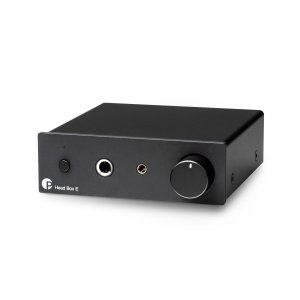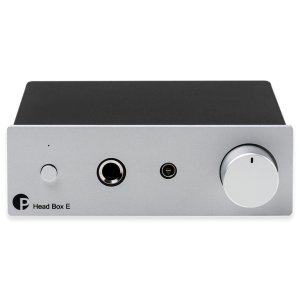

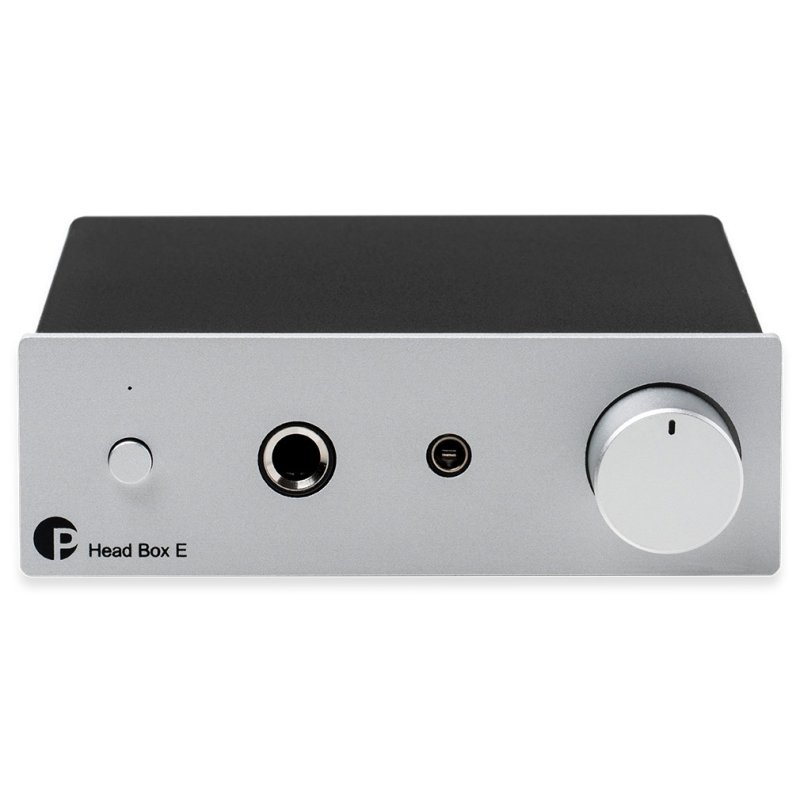
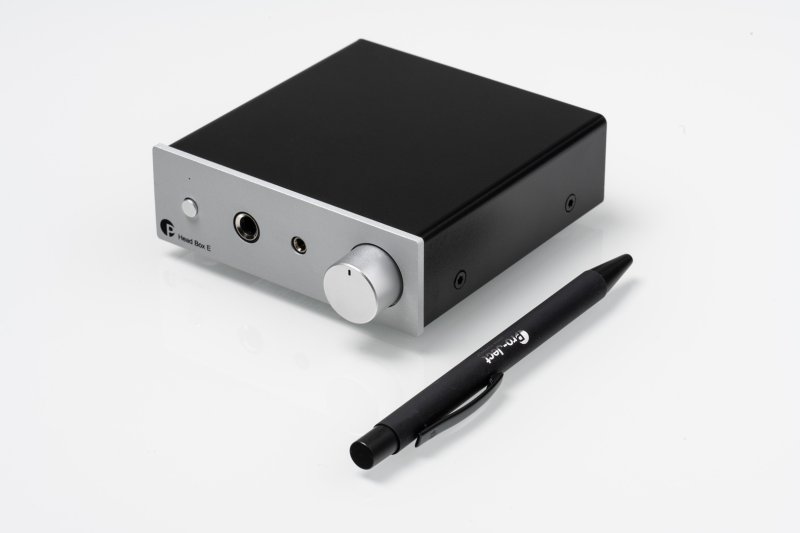
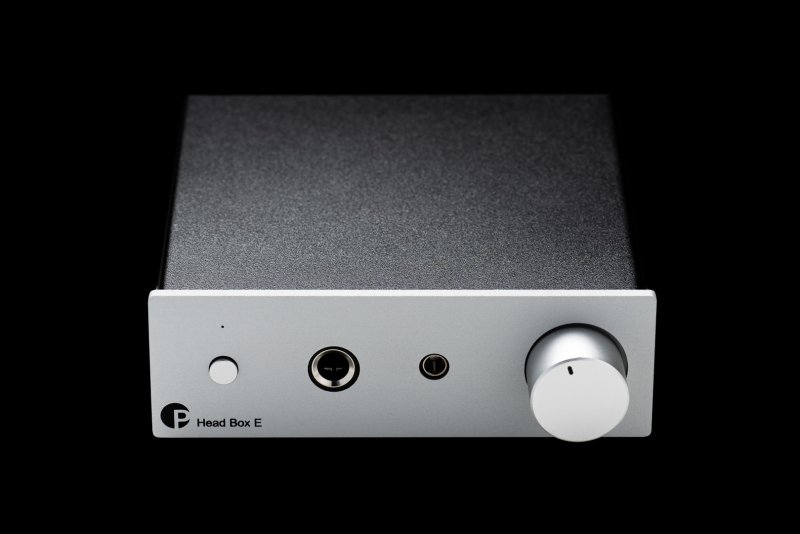
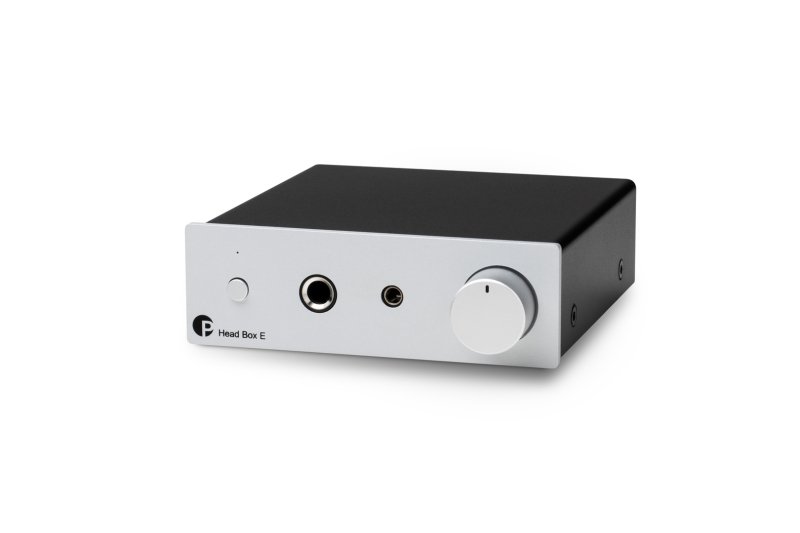
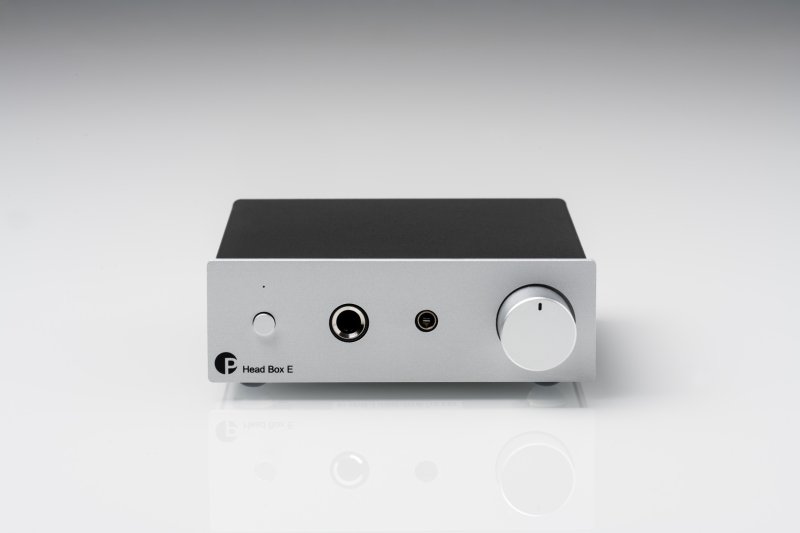

The Pro-Ject Head Box E is the entry point into Pro-Ject's Box Design Electronics range, a compact headphone amplifier that addresses the fundamental shortcoming of laptops, smartphones and streaming devices: insufficient power to drive quality headphones to their full potential. Finished in silver anodised aluminium, it sits naturally alongside the Stereo Box E integrated amplifier and CD Box E player, making it a natural choice for a coordinated Pro-Ject Box Design system.
Design and Build
The Head Box E is built around a fully discrete headphone amplifier circuit, eschewing the integrated chip designs found in many budget rivals in favour of individually selected components on a carefully laid-out circuit board. The full metal enclosure shields the circuitry from electromagnetic interference and vibrations, both of which can cause audible colouration. Front-panel controls and faceplates are machined from solid aluminium, giving the unit a premium feel despite its accessible price. Its compact footprint (103 x 37 x 120 mm) makes it easy to position on any desk or shelf.
Connections and Flexibility
On the front panel, the Head Box E provides both a 6.35 mm (quarter-inch) headphone jack for traditional hi-fi headphones and a 3.5 mm socket for modern in-ear and over-ear designs. Both outputs can be used simultaneously, allowing two listeners to share a source. A single pair of RCA inputs accepts a line-level source, and a corresponding RCA loop output lets the signal pass through to a power amplifier or active speakers, giving the Head Box E the flexibility to sit in a full hi-fi chain as a headphone tap rather than an end point. For audiophiles who want to further optimise performance, the unit is compatible with Pro-Ject's Accu Box S2 and Accu Box S2 USB battery power supplies in place of the supplied 5V DC adaptor.
Performance
With 665 mW into 32 ohms, the Head Box E delivers substantially more headroom than a typical portable source output. The discrete output stage achieves a signal-to-noise ratio of -105 dBV and total harmonic distortion of under 0.005 percent, while frequency response extends from 20 Hz to 80 kHz. Output impedance is under 1 ohm, meaning the amplifier will not impose a damping factor penalty on low-impedance headphones. These figures place the Head Box E well above its price class in measured performance, and the discrete topology contributes a confident, dynamic sound character that reveals more of what quality headphones are capable of.