


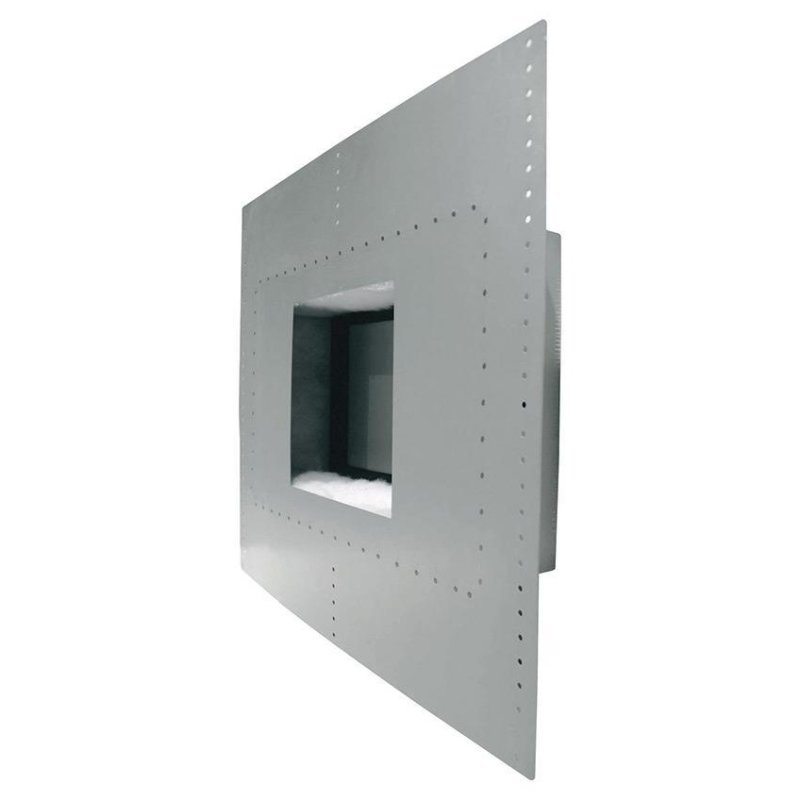

The KEF RNC100R is a steel rear enclosure designed for use with the KEF Ci100QR in-ceiling speaker. Fitted during the pre-wiring stage of a new construction installation, it creates a sealed acoustic chamber behind the speaker driver, improving bass definition, reducing sound transmission into the cavity above, and protecting the driver from dust and debris during the construction process.
Purpose-Built for KEF Ci Speakers
KEF's Ci series architectural speakers are engineered for flush installation into ceilings and walls, and the RNC100R is the manufacturer-specified back box for the 100mm round Ci100QR model. The enclosure is fabricated from steel and features a series of ventilation perforations around its perimeter, which are designed to prevent the build-up of heat and moisture without compromising the acoustic seal. The circular form factor matches the driver cut-out diameter of 118mm (4.65 inches), ensuring a precise and airtight fit.
Installation Considerations
The RNC100R is intended for pre-installation during the first fix stage of a building project, before plasterboard or ceiling panels are fitted. At this stage the enclosure is dropped into the ceiling void and secured, leaving the speaker to be fitted cleanly from below at second fix. It is worth noting that the KEF Ci100QR features an integrated plastic rear can as standard; before fitting the RNC100R steel enclosure, this integrated plastic can must be removed to allow the steel unit to seat correctly.
Acoustic and Practical Benefits
Without a rear enclosure, an open-back in-ceiling speaker fires sound freely into the ceiling void, losing bass energy and allowing sound to cross into adjacent rooms. The RNC100R eliminates both problems by sealing the rear of the driver in a dedicated steel chamber. The result is a tighter, more controlled bass response and significantly reduced acoustic bleed into upper floors or neighbouring rooms. The steel construction also provides a degree of fire-resistance and mechanical protection during the construction phase, when drivers are vulnerable to impact and contamination.