


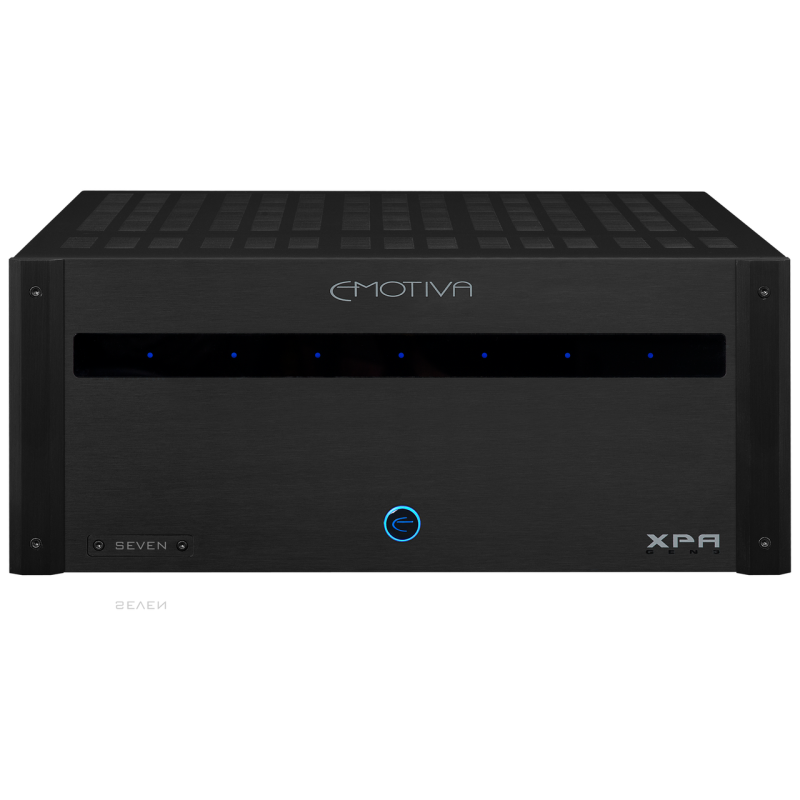
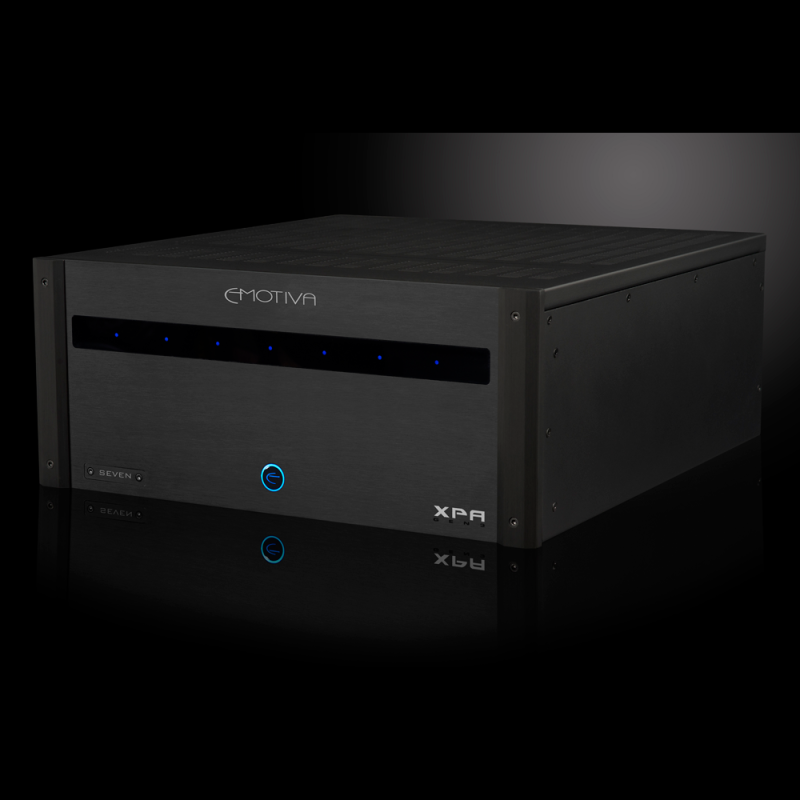
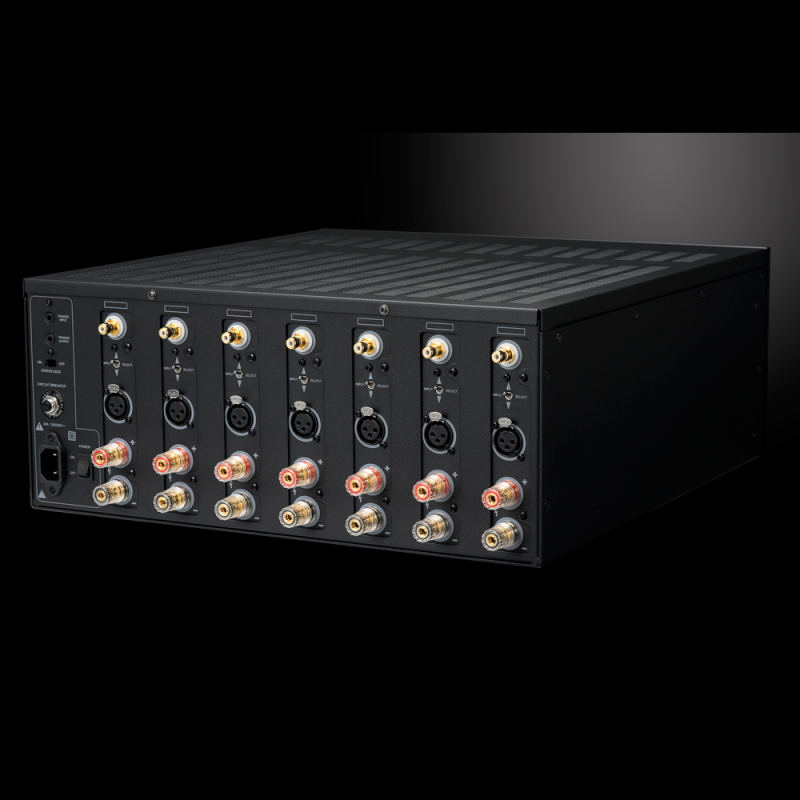

The Emotiva XPA-7 Gen3 is a seven-channel power amplifier from Emotiva’s modular XPA Gen3 range. The Gen3 platform spans configurations from two to eleven channels, all sharing the same full-size chassis and high-current switch-mode power supply. The XPA-7 is populated with seven of Emotiva’s High-Powered Single Channel Modules, delivering 200 watts RMS per channel into 8 ohms with all seven channels driven simultaneously. Below it in the lineup sit the five- and three-channel variants, while above it the nine- and eleven-channel models fill out the range. The Differential Reference XPA-DR series represents Emotiva’s top-tier amplification.
Amplifier Topology
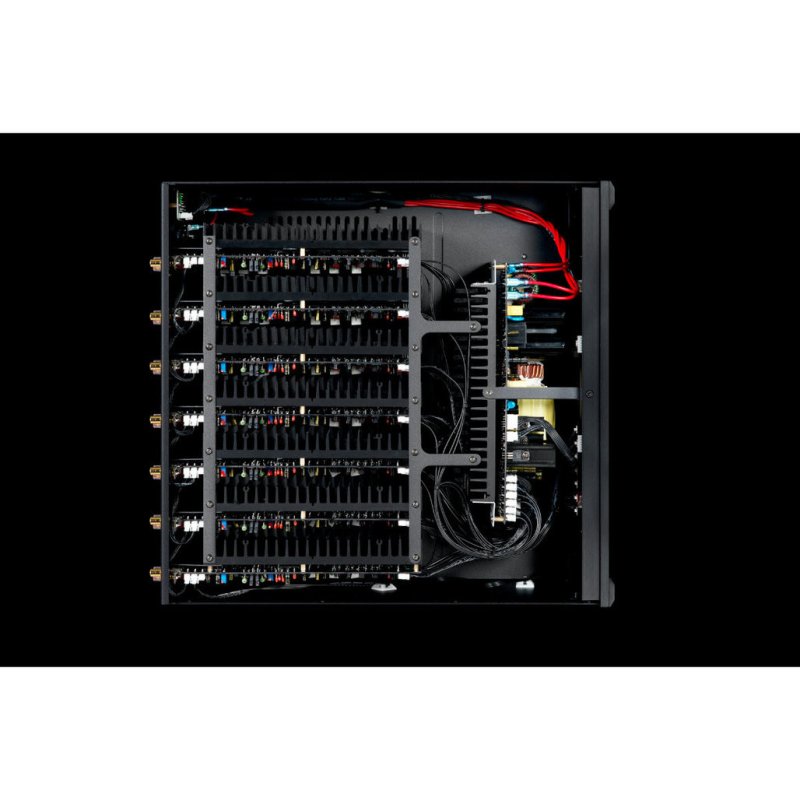
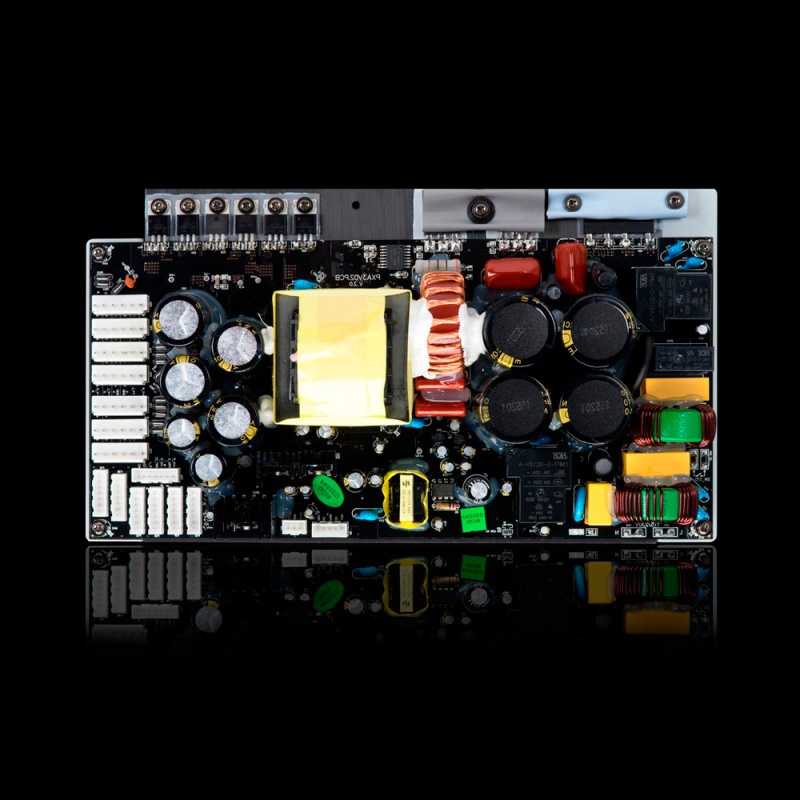
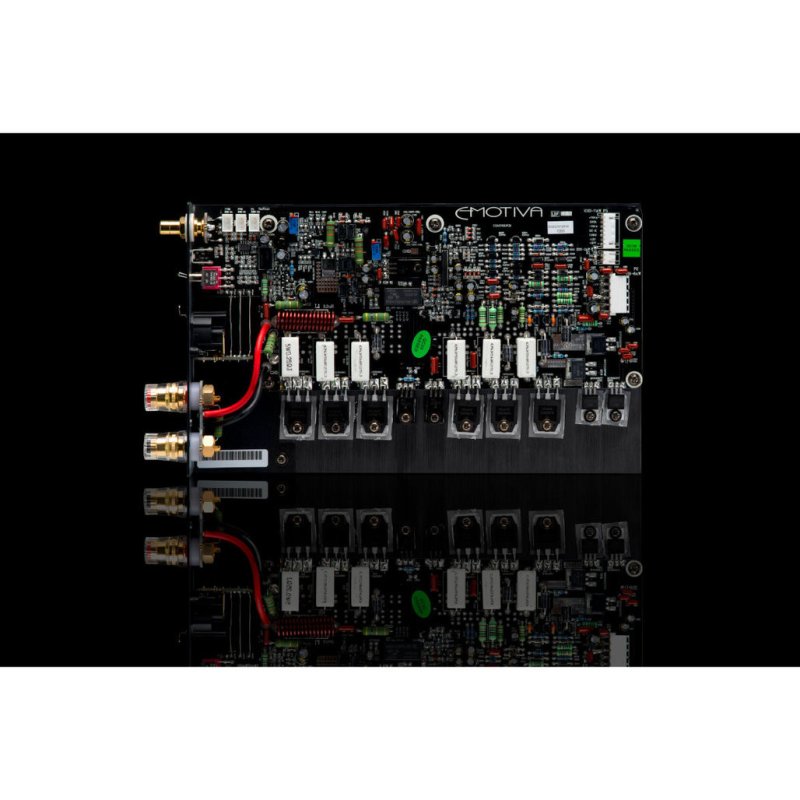
Each of the seven amplifier modules is a fully discrete, dual-differential, high-current, short-signal-path Class A/B design. The modules operate with Emotiva’s Optimized Class H™ power supply topology, which switches between supply rail voltages based on signal demand — running at a lower voltage during quieter passages to minimise power consumption and heat, then seamlessly switching to a higher rail when the signal requires it. A high-efficiency switch-mode power supply capable of delivering over 3 kW of fully regulated power feeds all seven modules. Microprocessor-controlled fault protection monitors each channel independently.
Modular Design
The XPA Gen3 platform is fully modular. All configurations from two to eleven channels share the same chassis, and additional amplifier modules can be factory-installed to expand the channel count as a system grows.
Inputs & Control
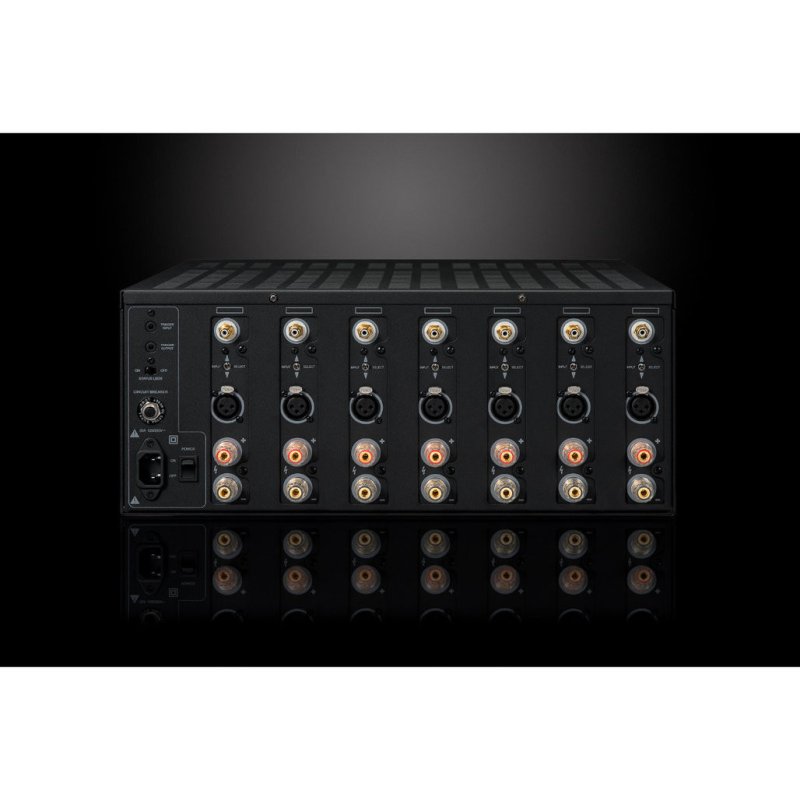
Each channel provides a choice of balanced (XLR) or unbalanced (RCA) input, independently selected via metal toggle switches on the rear panel. A minimum recommended load impedance of 4 ohms per channel is specified, accommodating a wide range of loudspeaker loads. A 12V trigger input and output allow the XPA-7 Gen3 to be integrated into an automated system, powering on and off in response to a processor or preamplifier.