


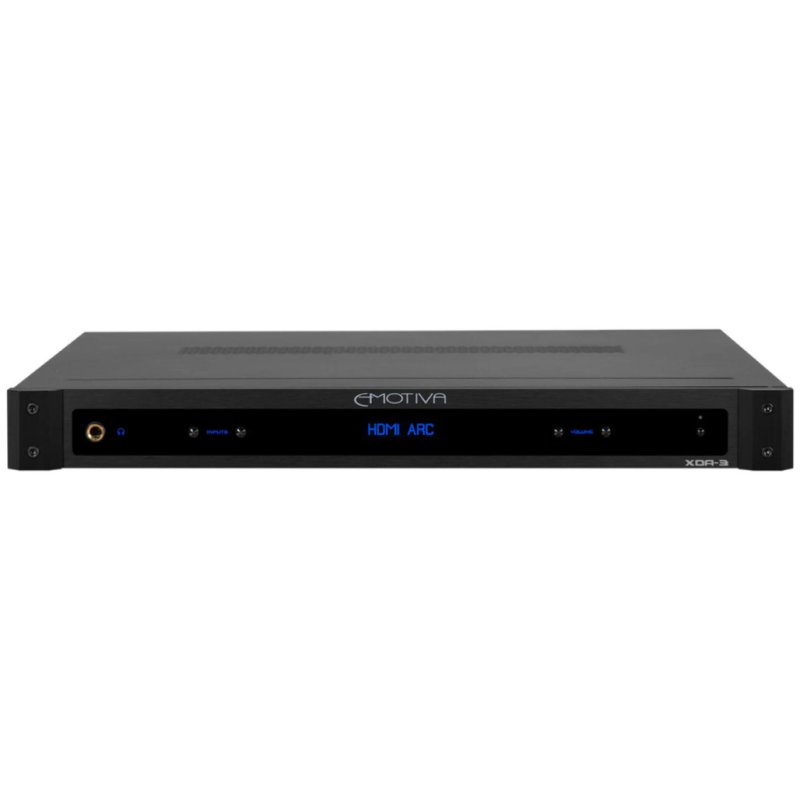

The Emotiva XDA-3 is a two-channel DAC and preamplifier from Emotiva’s Differential Reference series — the company’s flagship engineering tier, designed around fully balanced, fully differential signal paths throughout. It succeeds the XDA-2 and is built to serve as both a standalone DAC and a central control hub for multi-source systems, combining extensive digital connectivity with analogue inputs, a headphone amplifier, and variable-level outputs for direct connection to power amplifiers.
DAC & Digital Architecture
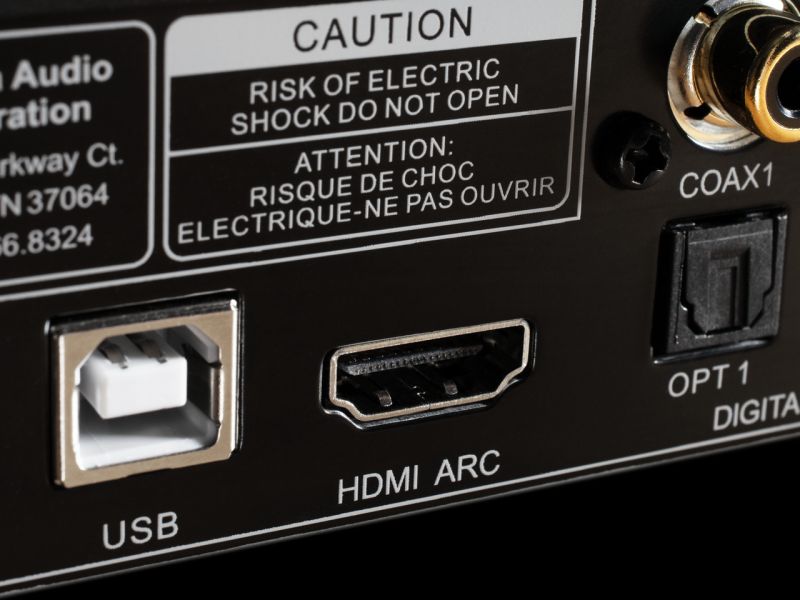
At the heart of the XDA-3 sit twin ESS ES9038Q2M SABRE32 Reference DAC chips, incorporating ESS’s Hyperstream II architecture and Time Domain Jitter Eliminator technology. The USB interface is handled by a Comtrue CT7601 32-bit/768 kHz USB audio bridge. The USB input supports stereo PCM at sample rates and bit depths up to 32-bit/768 kHz, DoP (DSD over PCM) at DoP64, DoP128, and DoP256, and native DSD at DSD64, DSD128, DSD256, and DSD512. No drivers are required for Windows, Apple, or most Linux computers. The four S/PDIF inputs — two coaxial and two optical Toslink — accept all standard sample rates and bit depths up to 24-bit/192 kHz. An HDMI-ARC input provides a direct digital audio connection from a television.
Analogue Signal Path
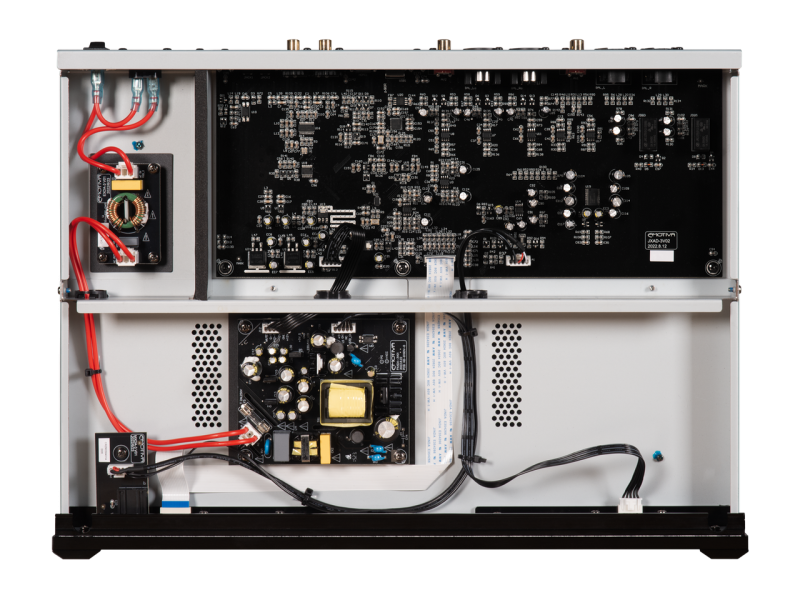
The signal path for digital inputs is fully balanced and fully differential, from the balanced outputs of the DAC chips through to the XLR connectors on the rear panel. The signal path for balanced analogue inputs is equally fully balanced and fully differential from input to output. Analogue inputs follow a purely analogue path and are never converted into the digital domain. The analogue stage uses OPA1656 operational amplifiers — ultra-low-noise, low-distortion, FET-input audio op-amps. Volume is managed by an NJW1195A digitally controlled analogue ladder network, which maintains signal integrity through a true analogue attenuation path rather than processing in the digital domain.
Inputs & Outputs
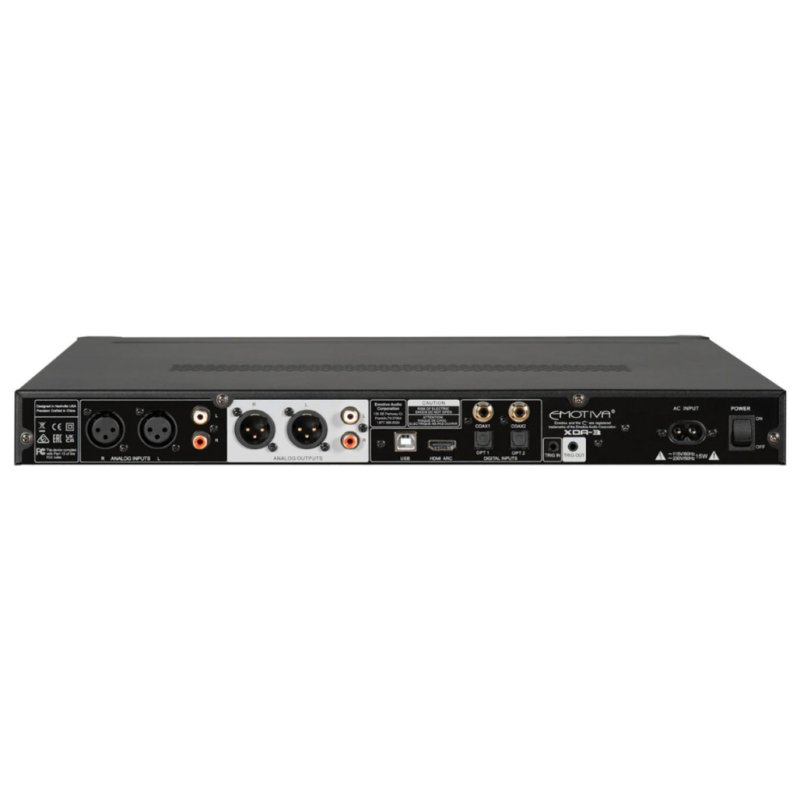
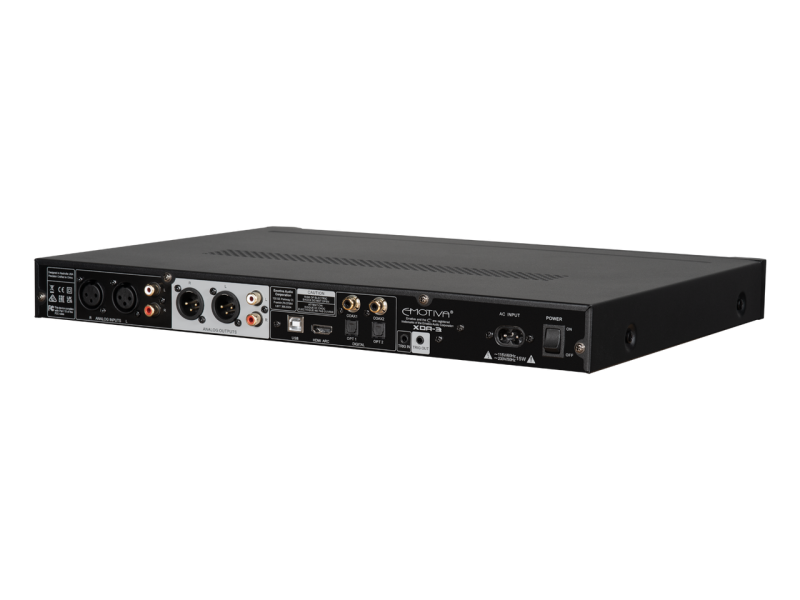
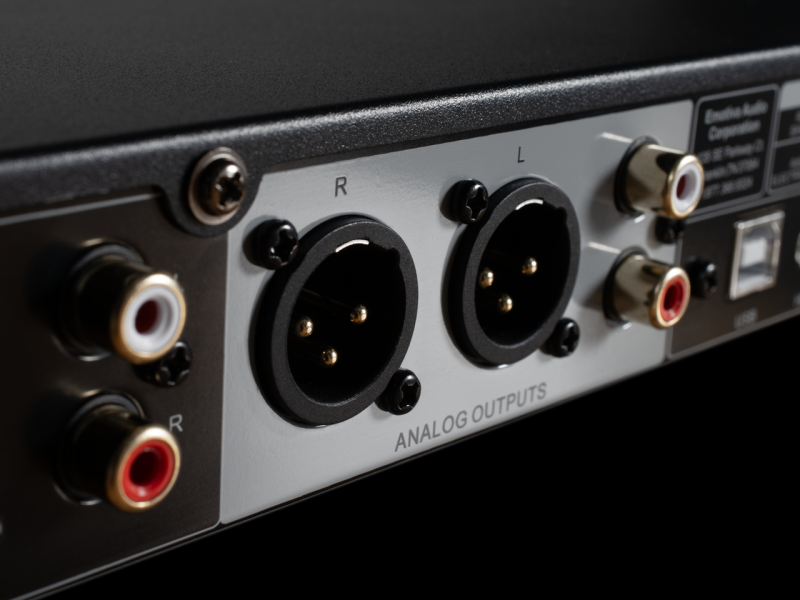
Digital connectivity comprises two coaxial S/PDIF inputs, two optical Toslink inputs, one USB input, and one HDMI-ARC input. Two analogue inputs are provided: one balanced pair (XLR) and one unbalanced pair (RCA). Outputs comprise one balanced stereo pair (XLR) and one unbalanced stereo pair (RCA), both with variable level for direct connection to power amplifiers. A front-panel headphone output with a 6.35 mm (¼ inch) jack is also provided.
Headphone Amplifier
The built-in headphone amplifier is based on the Texas Instruments TPA6120A2 — a high-power, current-feedback, monolithic Class A/B design. This dedicated headphone stage provides a high-fidelity signal path for personal listening from any of the XDA-3’s inputs.
Construction & Controls
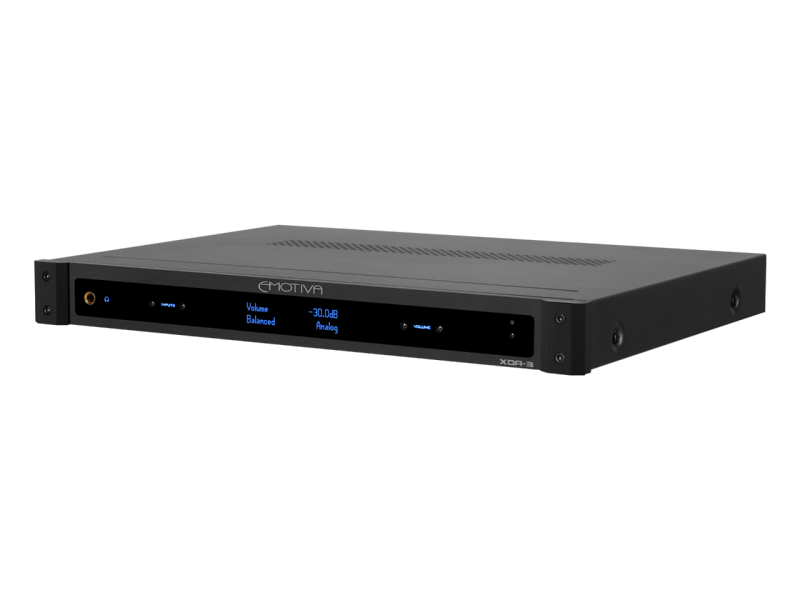
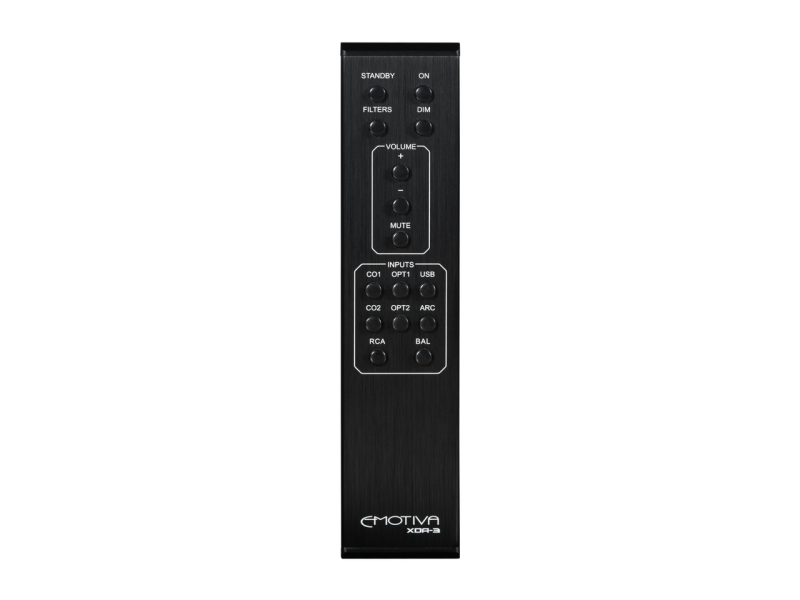
The XDA-3 is housed in a full-sized all-metal cabinet and features a high-visibility OLED graphical display. It is supplied with a full-featured machined aluminium remote control. The internal power supply operates on 115 or 230 VAC (±10%) at 50/60 Hz, making it compatible with UK mains without modification.