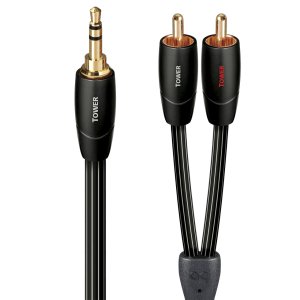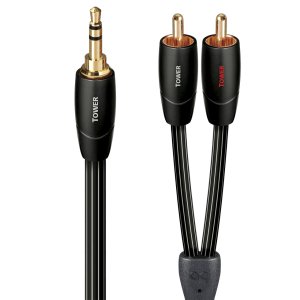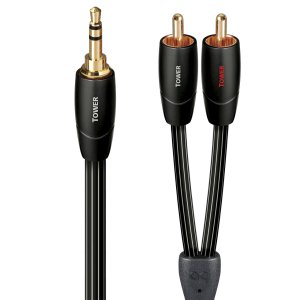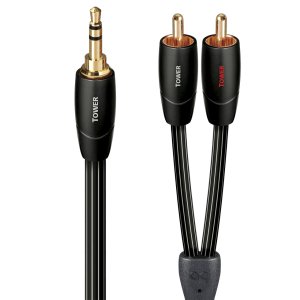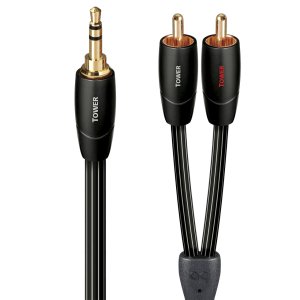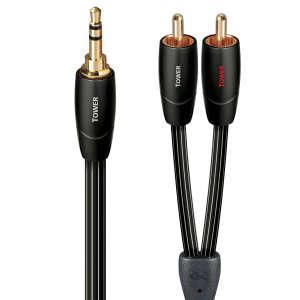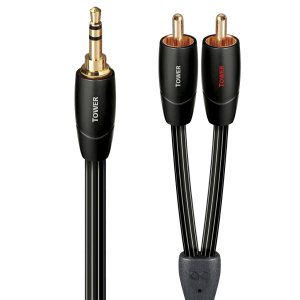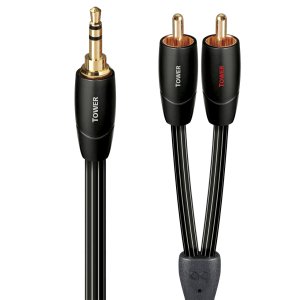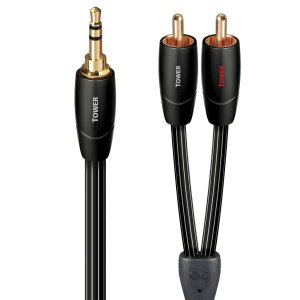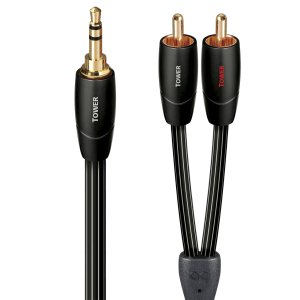

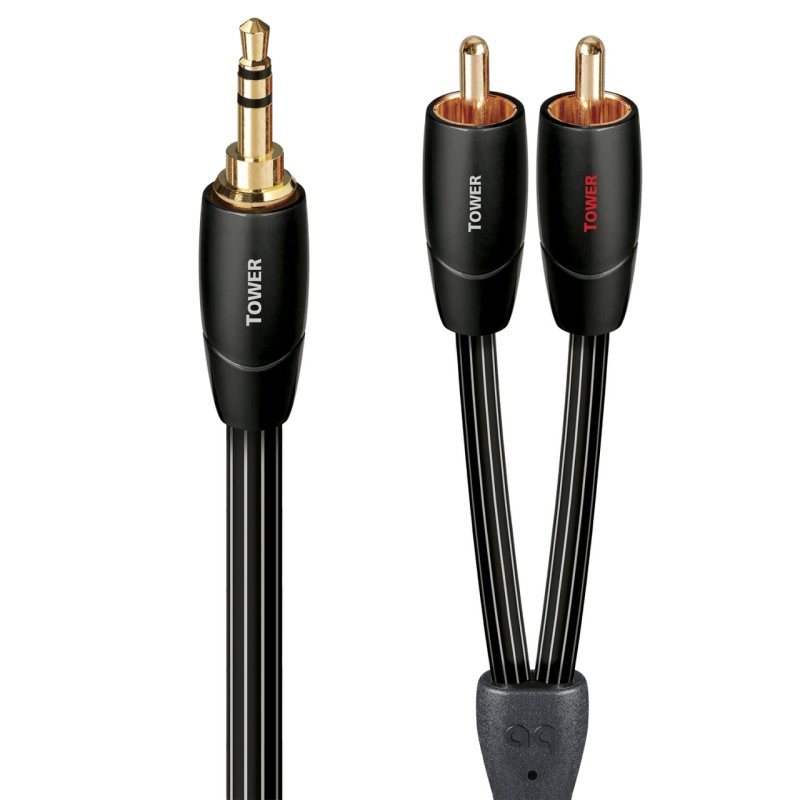

The AudioQuest Tower sits at the entry point of AudioQuest's analogue interconnect range, below the Evergreen, Golden Gate, Big Sur, and Sydney. Despite its entry-level positioning, the Tower uses the same core engineering principles found throughout the range: solid conductors rather than stranded, air-based dielectrics rather than solid plastics, and cold-welded terminations rather than soldered joints. This 3.5mm to RCA variant connects a portable device, laptop, or headphone output to an amplifier or AV receiver equipped with standard RCA inputs.
Conductor and Dielectric
Tower uses Solid Long-Grain Copper (LGC) conductors. Solid conductors eliminate strand-interaction distortion — the interference that occurs when individual strands within a conventional cable make and break contact with one another. Long-Grain Copper has a smoother, more consistent grain structure with fewer oxides and impurities than standard OFHC (Oxygen-Free High-Conductivity) copper, allowing a cleaner signal path.
The dielectric is Foamed Polyethylene (PE). Foamed-PE uses air pockets within the insulation to reduce the material’s contact with the conductor. Because air absorbs far less energy than solid plastic, this minimises the out-of-focus effect — a subtle smearing of detail — that denser dielectric materials can introduce.
Geometry and Noise Dissipation
Tower employs an Asymmetrical Double-Balanced geometry, designed specifically for single-ended (RCA) applications. This configuration provides a relatively lower impedance on the ground path, resulting in richer dynamics compared to a single-path design.
A Metal-Layer Noise-Dissipation system absorbs and reflects radio-frequency interference before it can reach the cable’s ground reference plane. Unlike conventional shielding, which drains noise directly to ground and can distort the ground reference in the process, this approach shields the shield — intercepting RF energy without compromising signal integrity.
Termination
All connections are Cold-Welded and gold-plated. Cold-welding uses high-pressure contact rather than solder — which AudioQuest identifies as a common source of distortion — to create a secure, low-resistance junction between the conductor and the connector. The 3.5mm TRS plug carries the stereo signal from the source, splitting to two RCA plugs for the left and right channels at the amplifier end.