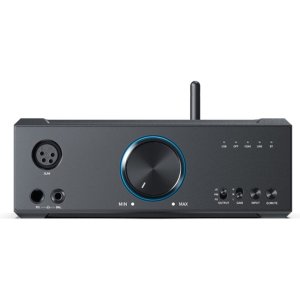

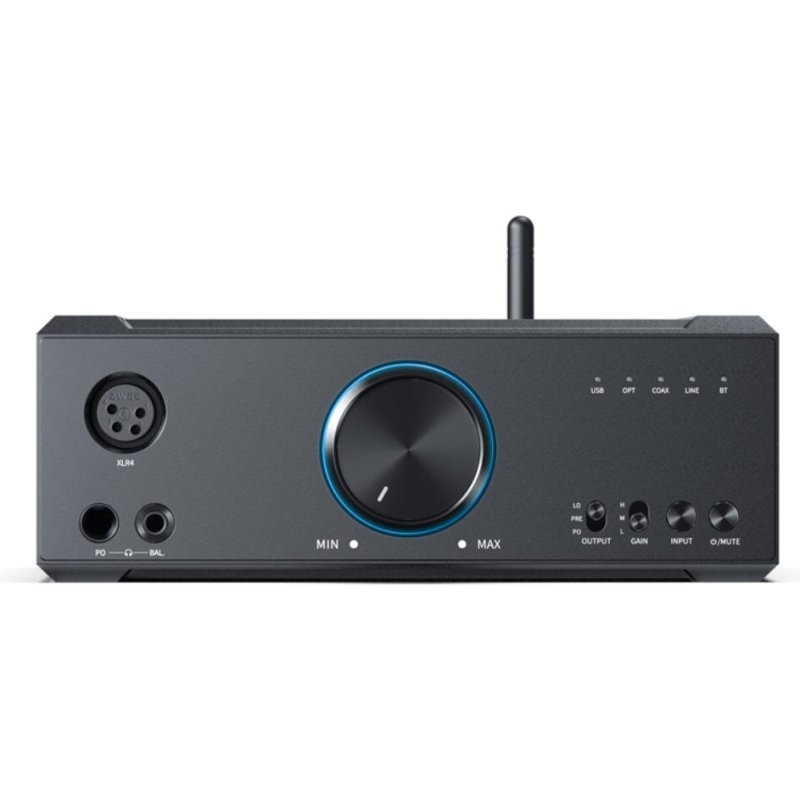
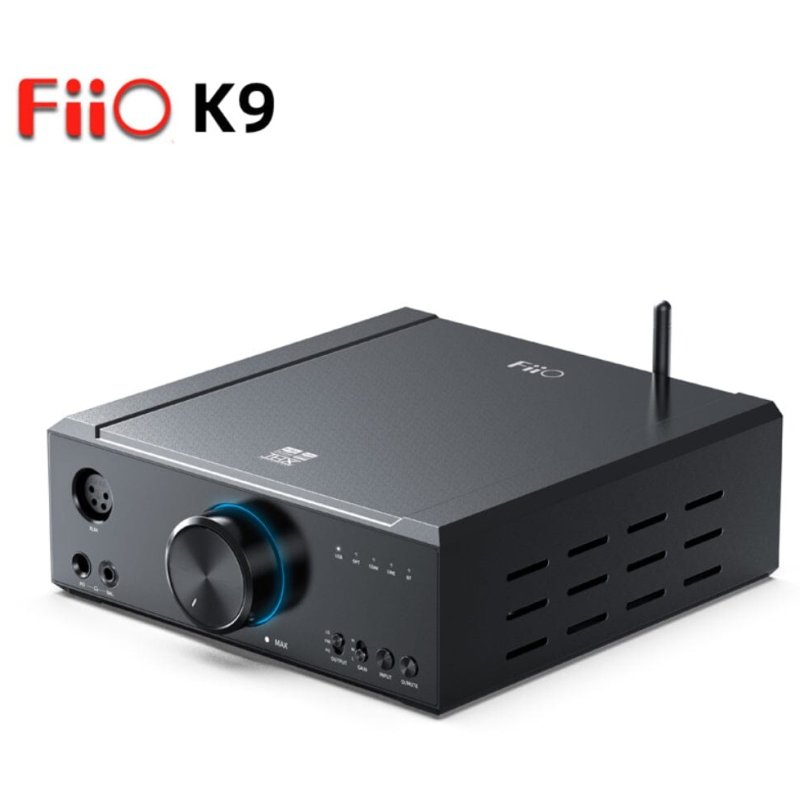

The FiiO K9 is FiiO’s desktop headphone DAC and amplifier, pairing a dual ESS ES9068AS DAC stage with the powerful THX AAA 788+ amplifier module. It is designed for audiophiles seeking a capable desktop headphone system that can drive the widest range of headphones from a single compact unit, and that can double as a preamplifier in a wider audio system.
ESS ES9068AS DAC Stage
At the heart of the K9 Standard are two ES9068AS DAC chips, handling the left and right channels independently for a truly balanced conversion path. The arrangement supports PCM audio up to 768kHz/32-bit and DSD up to DSD512. Digital and analogue sections are fully separated to prevent interference and preserve signal purity throughout the signal chain.
THX AAA 788+ Amplification
The K9 features the THX AAA 788+ amplifier module, delivering up to 2,000mW into 32 ohms and up to 780mW into 300 ohms at 1% THD, making it capable of driving virtually any headphone on the market — from sensitive in-ear monitors to demanding full-size planar magnetic headphones. Three gain modes (Low, Medium, and High) allow precise matching to headphones of varying sensitivity. Headphone outputs include a 6.35mm single-ended socket, a 4.4mm balanced socket, and an XLR-4 balanced socket on the front panel.
Versatile Connectivity
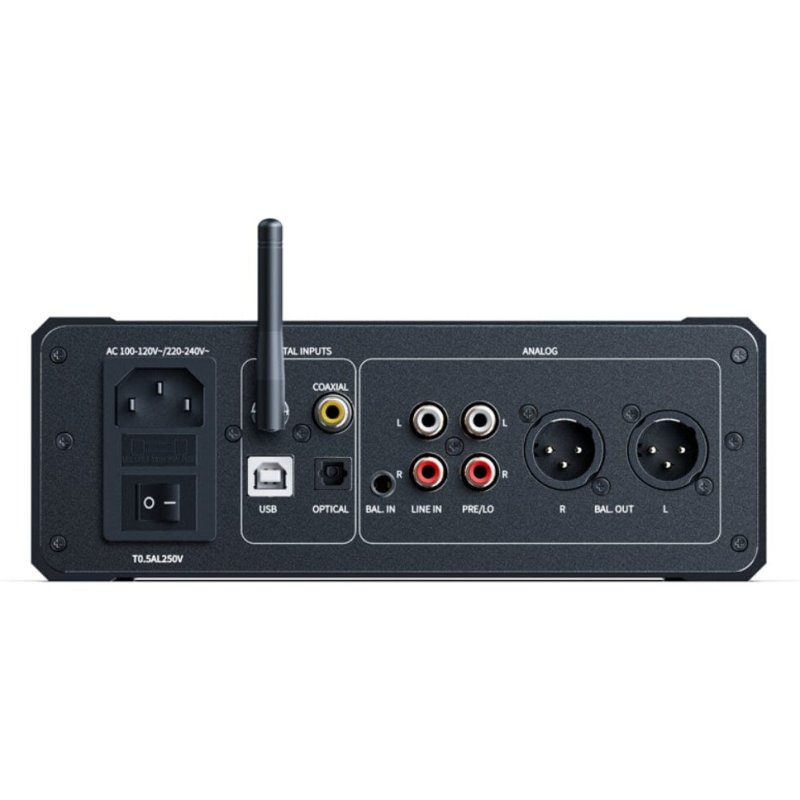
The K9 accepts input from USB-B (UAC1.0 and UAC2.0 compatible), USB-C, optical TosLink, coaxial RCA, analogue RCA and 4.4mm balanced inputs, and Bluetooth 5.1 via the Qualcomm QCC5124 chip with support for LDAC, aptX Adaptive, and aptX HD. Rear outputs include RCA line-level and balanced XLR-3 jacks for connection to powered speakers or a power amplifier, making the K9 equally suited as a system DAC and preamplifier.
Build and Design
Constructed from machined aluminium, the K9 has a substantial desktop presence and can be used horizontally on its integrated feet or vertically using the included stand tray. A stepped volume encoder with 120 discrete levels provides precise control, and the front display shows the selected input, gain mode, and volume at a glance. Power is supplied via a linear transformer backed by large filter capacitors for a stable, low-noise supply.