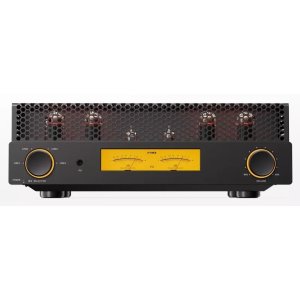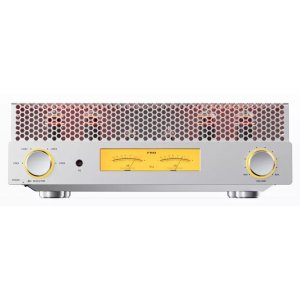


The EA13 is FiiO's first full-size valve amplifier, and the model that takes the brand out of portable players, desktop DACs and headphone amplifiers and into traditional two-channel hi-fi. It was announced alongside the SV13, FiiO's first pair of passive loudspeakers, the two designed to form the foundation of a complete stereo system. This is not a hybrid design: both the voltage amplification and the output stage are handled by valves.
Valve Complement
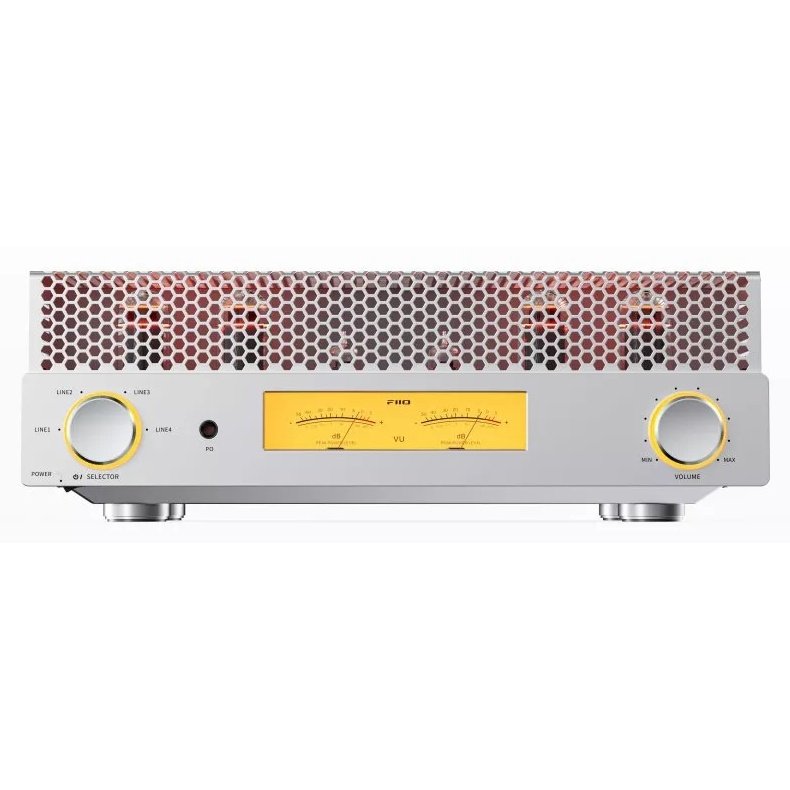
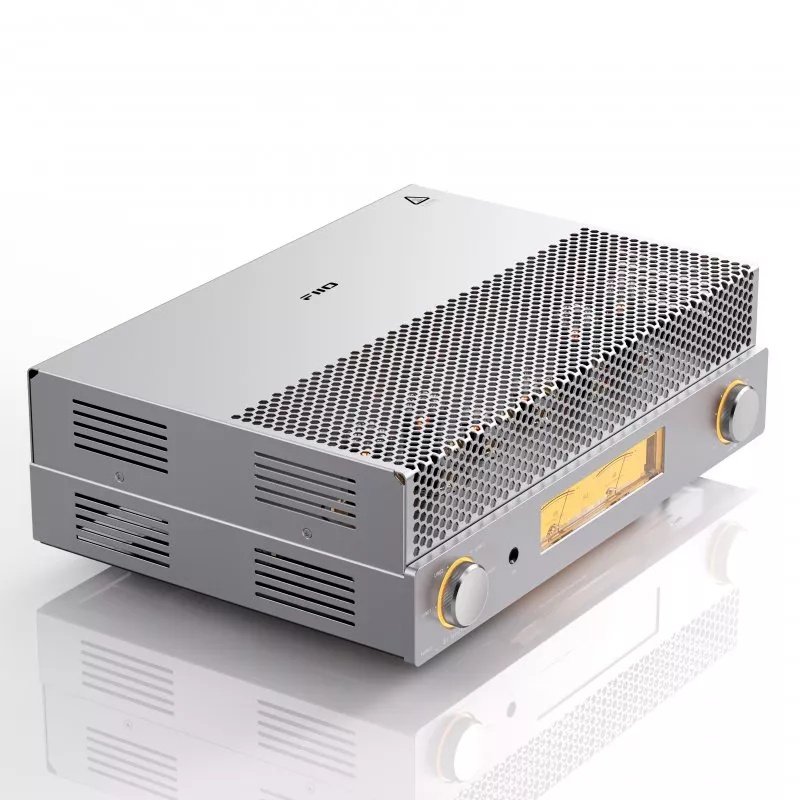
Voltage amplification is handled by two Sylvania NOS PCF80 valves, chosen for a transparent presentation and an open soundstage. Power amplification comes from four Czech-made JJ Electronic EL34 valves, the classic European output valve, which give the EA13 its warm, full-bodied character. The valves are recessed into the chassis and covered by a removable perforated metal grille, so their amber glow stays visible without leaving hot glass exposed.
Class A Push-Pull Output
The output stage runs push-pull in pentode mode and operates entirely in Class A, a configuration drawn from valve amplifier circuits of the 1950s. Rated output is 28W per channel into 8 ohms, enough for most bookshelf speakers and for efficient floorstanders. Separate 4 ohm and 8 ohm taps are provided on each channel so the amplifier can be matched properly to the loudspeaker load. Behind the output stage sits a custom EI silicon steel laminate transformer, filled internally with epoxy resin and fine sand and then sealed inside its own enclosure to suppress vibration and provide electromagnetic shielding.
Connections and Control
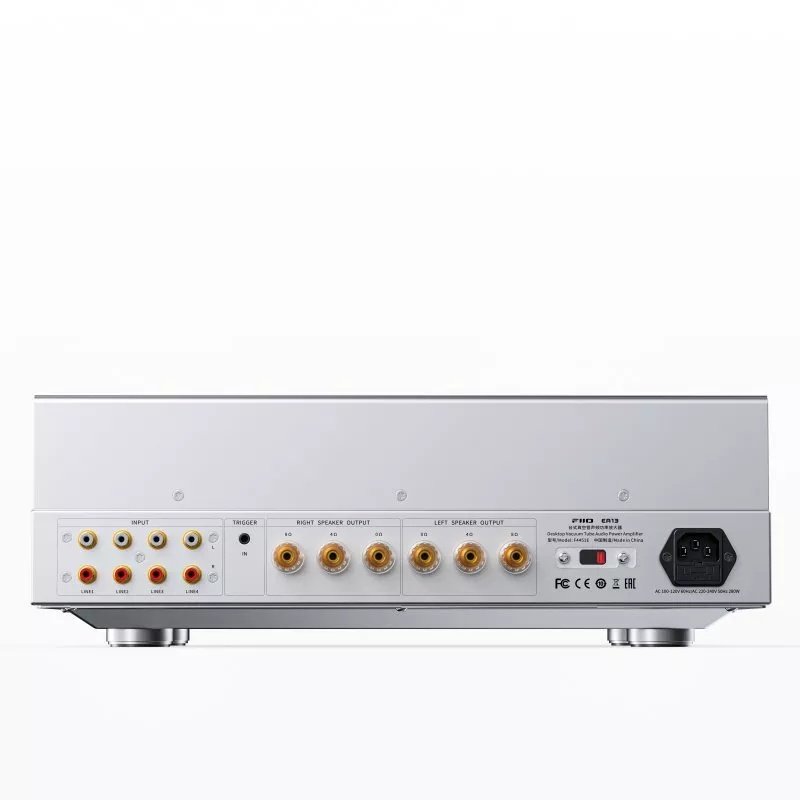
Four line-level RCA inputs are provided, chosen from a four-position rotary selector on the front panel. Volume is handled by an analogue potentiometer rather than a digital attenuator, keeping the signal path analogue from input to speaker terminals. A 6.35mm single-ended headphone output on the front panel allows private listening, and a 12V trigger input on the rear lets the EA13 be switched on and off by a source component. A signal detection circuit places the amplifier into a low-power standby mode after 30 minutes without an input signal, reducing consumption and helping to extend valve life.
Build and Presentation
The front panel is CNC machined from aviation-grade aluminium and sandblasted, thickened to resist resonance, and the chassis is a unibody construction with side grille ventilation and vibration-damping feet. Two mechanical VU meters dominate the fascia, driven by a dedicated control IC and lit with a warm retro backlight. The illumination on both knobs is adjustable, so the lighting can be tuned to sit alongside the natural glow of the valves or switched off entirely.