


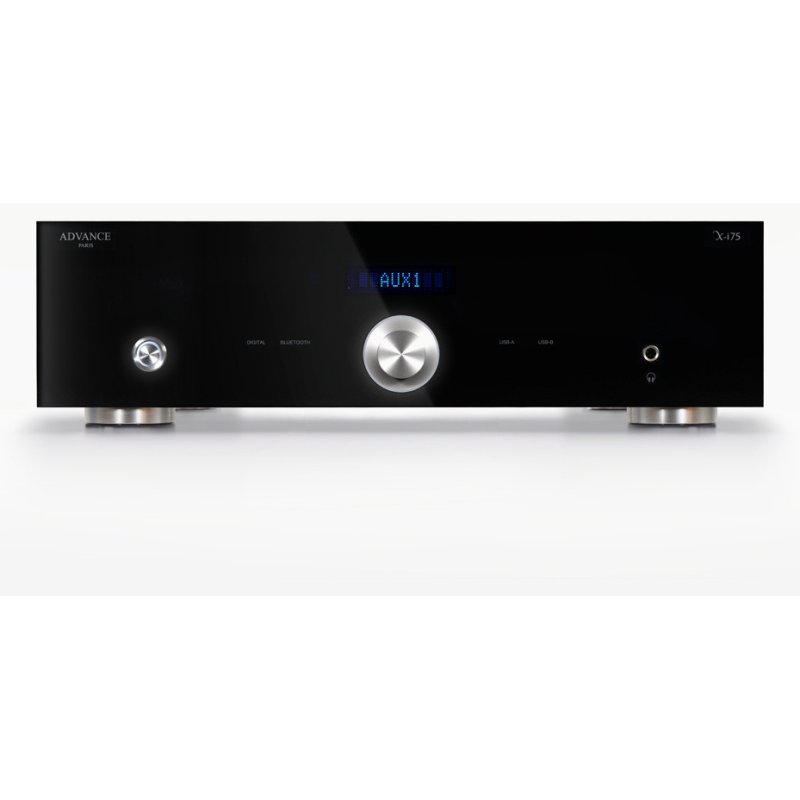
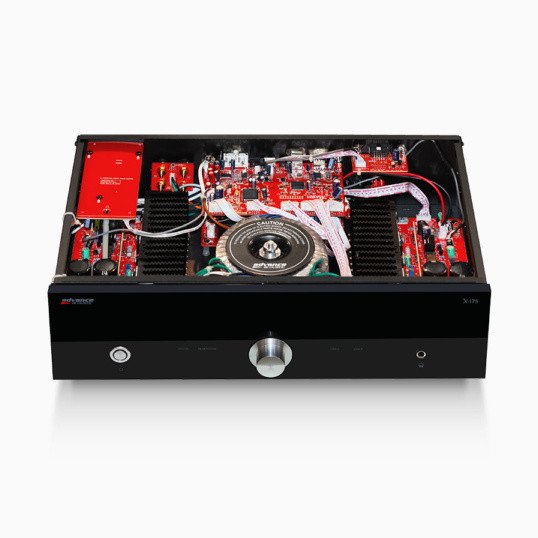

The X-i75 is the core integrated amplifier in Advance Paris's Classic-Line range, sitting between the entry-level X-i50 BT and the more powerful X-i105. Designed and engineered in France, it combines a 2 × 75W RMS Class A/B power amplifier with a built-in DAC, MM phono stage, and Bluetooth receiver in a single full-width chassis. The result is a versatile hub that handles vinyl, CD, streaming, and wireless sources without requiring separate components.
Amplification & Hi Bias Mode
The X-i75 uses a Class A/B output stage fed by a toroidal transformer, delivering 2 × 75W RMS into 8Ω and 2 × 110W RMS into 4Ω. A front-panel Hi Bias switch extends the Class A operating region of the output transistors into the first few watts of output, where most listening takes place. In this mode the amplifier runs warmer but with reduced crossover distortion at low levels, lending a smoother character to quiet passages and low-level detail retrieval.
Built-in DAC
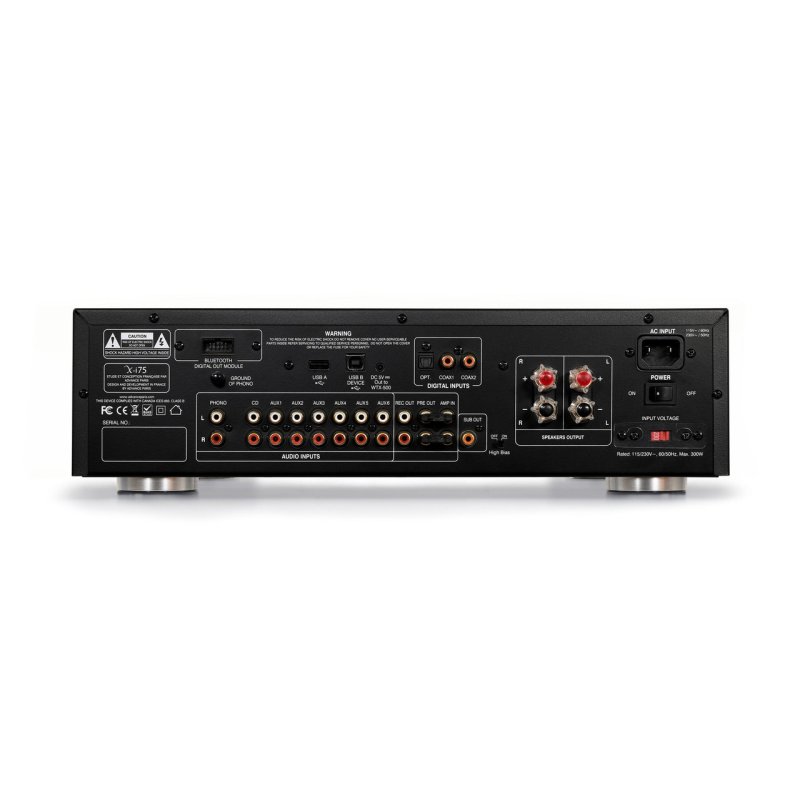
Digital sources are handled by a Wolfson WM8740 DAC paired with an AKM AK4113 digital receiver. The USB-B input uses an XMOS asynchronous interface, accepting PCM signals up to 24-bit/192kHz with minimised jitter. Two coaxial S/PDIF inputs and one optical TosLink input accommodate CD transports, set-top boxes, and televisions. A USB-A input is also provided for direct playback from storage devices.
Phono Stage & Analogue Inputs
A built-in moving-magnet (MM) phono stage with a 2.5mV sensitivity and 47KΩ input impedance connects directly to a turntable, removing the need for an external phono preamplifier. Six further analogue line-level inputs (labelled CD, Tuner, and four Aux) cover additional sources, while a Bluetooth receiver adds wireless streaming from phones and tablets.
Outputs & Flexibility
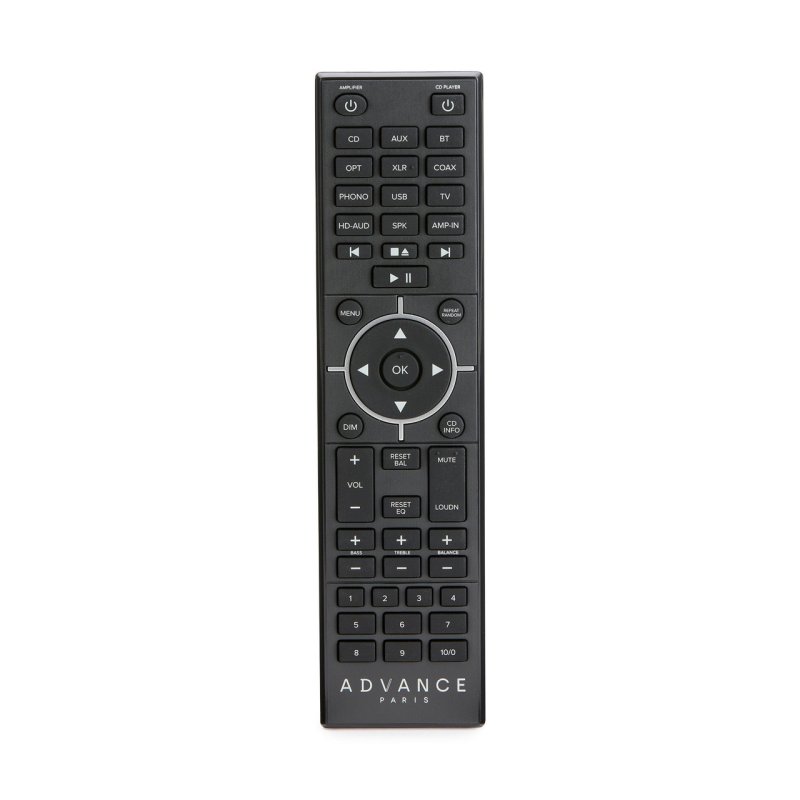
The X-i75 includes a dedicated subwoofer output for integration with a powered sub, a record output for tape or digital recording, and a 6.35mm headphone socket on the front panel. The amplifier and preamplifier sections are separable, allowing an external power amplifier or active crossover to be inserted into the signal path. Tone controls offer ±10dB of bass and treble adjustment, with a bypass switch for a flat signal path.